A common misconception in DeFi is that the cheapest cross-chain swap is simply the one showing the lowest gas fee. That sounds reasonable, but it confuses one visible cost with the total cost of execution. A cross-chain transaction can involve a source-chain swap, a bridge or messaging step, a destination-chain transaction, slippage, liquidity-provider fees, and sometimes an approval transaction before any trade occurs. The cheapest-looking route may therefore be more expensive in practice than a route with a higher quoted gas amount.
This matters especially for users in the United States, where network conditions, dollar-denominated fees, and the tax or accounting consequences of multiple transactions can make a “small” optimization less trivial than it appears. A browser wallet such as Rabby can improve transaction awareness and help users inspect execution details, but it does not repeal network congestion, bridge economics, or the risks of smart-contract interaction. Gas optimization is best understood as a decision process, not a single setting.
The real cost of a cross-chain swap
On a single chain, users often think in terms of gas: the fee paid to validators or block producers for including a transaction. Technically, that fee depends on the amount of computational work and the price paid per unit of that work. A swap involving a complex contract call can require more gas than a simple transfer, while a congested network can raise the market price of execution.
Cross-chain activity adds another layer. The source transaction may approve a token, exchange it through a decentralized exchange, and deposit the result into a bridge or cross-chain protocol. The destination side may then require a claim, mint, release, swap, or other contract interaction. Some systems bundle parts of this process, while others expose several separate steps. The user should therefore distinguish between network gas, protocol fees, and price impact. They are related, but they are not interchangeable.
For example, a route with low source-chain gas may depend on thin liquidity on the destination chain. If the trade moves the market price substantially, the user can lose more through price impact than was saved in gas. Conversely, a route with a somewhat higher transaction fee may use deeper liquidity and produce a better final amount. The relevant question is not “Which route has the lowest gas?” but “Which route delivers the best risk-adjusted output after all costs?”
That distinction corrects another popular assumption: batching always saves money. If a protocol supports a combined approval-and-swap flow or a single contract call, batching can reduce repeated overhead and lower the chance of user error. But a more complicated call can also consume more computational gas, and a failed complex transaction may waste the fee without completing the intended action. Batching is useful when it reduces redundant steps, not merely because it places several actions inside one transaction.
How a wallet extension contributes to optimization
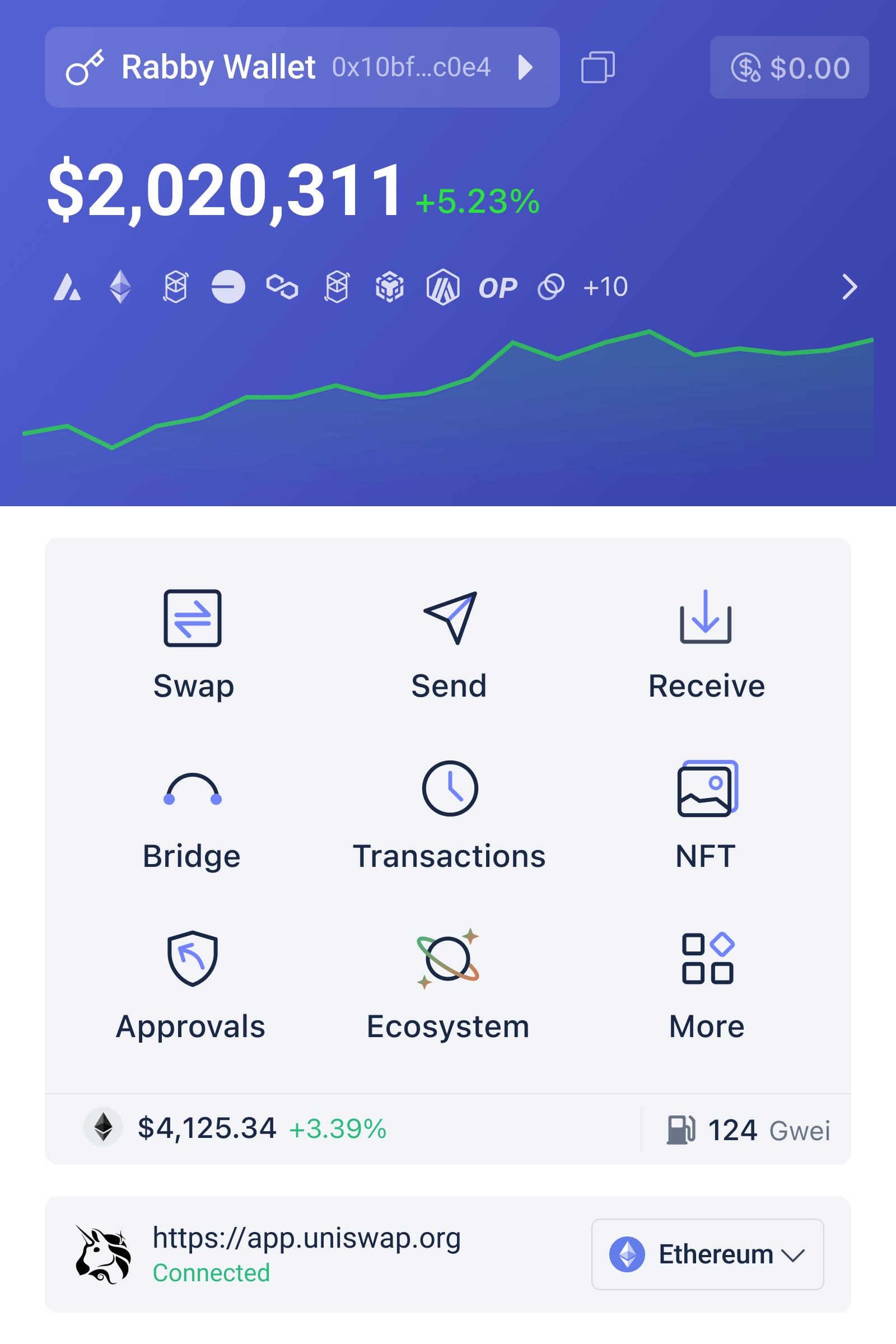
A wallet extension sits at the point where a user, a decentralized application, and a blockchain meet. It does not normally choose the underlying bridge or exchange route by itself, but it can make the route easier to inspect before signing. The practical value is visibility: which network is being used, which asset is being spent, what contract is being called, what approval is requested, and how much gas the transaction is attempting to reserve.
Users considering a rabby wallet installation should treat the download and setup process as a security decision, not just a convenience step. The extension should be obtained through a trusted, verified source, and the user should never enter a recovery phrase into a website, support form, or pop-up that requests it unexpectedly. A wallet interface can help explain a transaction, but it cannot make a malicious contract safe or recover assets sent to the wrong address.
Transaction simulation and risk warnings, where available, can be particularly useful for DeFi users because a signature often authorizes a precise contract action rather than a simple payment. A simulation may help reveal whether a swap is likely to succeed, whether the wallet balance changes as expected, or whether an approval grants broader spending authority than the user intended. These tools are valuable because they translate low-level contract behavior into a more legible preview.
That preview still has boundaries. A simulation is an estimate based on a particular state of the blockchain and a particular set of assumptions. Liquidity can change between simulation and execution. A token contract can behave differently under changing conditions. A bridge can experience delays or operational stress that a local transaction preview does not fully capture. Warnings should therefore be treated as evidence for further review, not as a guarantee of safety or final settlement.
A practical framework for reducing unnecessary gas
The most reliable optimization is often to eliminate avoidable transactions. Before starting a cross-chain swap, check whether the wallet already holds the native gas token on the source network. If it does not, the user may need a separate funding transaction, creating an inconvenient failure point. Also check whether the token has already been approved for the relevant contract. An approval may be necessary, but repeating approvals unnecessarily increases cost and expands the number of permissions granted.
Next, compare the complete route rather than the headline fee. A useful review includes:
- the amount expected to arrive on the destination chain;
- source-chain and destination-chain gas requirements;
- bridge, relayer, or service fees;
- slippage tolerance and expected price impact;
- the number of transactions requiring signatures;
- the trust and failure model of the bridge or application; and
- what happens if the route is delayed or only partially completed.
Timing can matter, but “wait until gas is low” is not a universal strategy. Gas prices can fall during quieter periods, yet a delayed transaction may expose the user to a changing token price or a less favorable bridge quote. For a large swap, the opportunity cost of waiting may exceed the expected fee saving. For a small swap, the opposite may be true: the fixed fee can dominate the transaction economics, making consolidation or postponement more sensible.
Users should also distinguish gas-price control from gas-limit control. The gas limit is an upper bound on how much computational work the transaction may consume; lowering it carelessly can cause failure. The gas price or fee setting affects how strongly the transaction competes for inclusion, depending on the network’s fee market. Reducing a fee may save money if the user can tolerate delay, but it may also leave a transaction pending or require replacement. A lower estimate is not automatically an efficient estimate.
Where optimization breaks down
There is a limit to what a wallet can optimize because many costs are determined outside the wallet. Bridge security, validator design, relayer incentives, liquidity fragmentation, and destination-chain settlement rules are protocol-level issues. A polished interface can make these mechanisms easier to navigate, but it cannot remove their structural trade-offs.
Cross-chain swaps are also exposed to a form of operational risk that ordinary gas comparisons miss. A source-chain transaction may succeed while the destination-side action is delayed, fails, or requires manual recovery. The user may still own the underlying funds, but they may not be immediately usable in the expected form. This is why final output, settlement conditions, and recovery procedures deserve as much attention as the initial quote.
Another boundary condition involves token approvals. An approval can be more consequential than the swap itself if it allows a contract to spend a large token balance. Unlimited approvals may reduce the need for future approval transactions, but they increase the potential loss if the approved contract is compromised or misused. More conservative approvals can cost an additional transaction later, yet they reduce the amount exposed to a faulty integration. The “optimal” choice depends on how often the application will be used and how much value the wallet holds.
Security and gas efficiency can conflict. A user who keeps funds in one wallet and reuses approvals may minimize transaction friction, but concentration increases the impact of a single mistake. Separating routine activity from higher-value holdings can add operational complexity and occasional transfer fees while improving loss containment. For many DeFi participants, this is a better form of optimization than shaving a small percentage from a single transaction.
What to watch as cross-chain infrastructure develops
The next meaningful improvements are likely to come from better coordination between route selection, transaction simulation, fee estimation, and recovery design. If applications can present a more complete estimate of destination-chain costs and settlement risk, users may make decisions based on delivered value rather than an isolated source-chain fee. That outcome is plausible, but it depends on protocols exposing reliable data and wallets presenting uncertainty without overwhelming the user.
One useful signal will be whether interfaces clearly separate guaranteed effects from conditional ones. “You will receive” and “you may receive after settlement” describe different experiences. Another signal is whether failed or delayed cross-chain transactions come with understandable recovery instructions. In a mature system, optimization should mean not only spending fewer dollars on successful transactions, but also reducing the probability and cost of confusing failures.
For now, the most defensible habit is simple: inspect the full transaction path, reduce unnecessary approvals and actions, maintain the correct native gas asset, and treat wallet warnings as prompts for judgment. A Rabby extension may make that inspection more accessible, but the final responsibility remains with the signer. DeFi users gain the most when they optimize for successful, secure settlement—not merely for the smallest number shown next to the word “gas.”
Frequently asked questions
Does a wallet extension automatically find the cheapest cross-chain swap?
Not necessarily. A wallet can display transaction details, estimate fees, and sometimes provide simulation or risk information, but route selection is generally determined by the decentralized application or service being used. Compare the complete amount received, protocol charges, slippage, settlement conditions, and security assumptions rather than relying on a wallet’s gas estimate alone.
Should I always set a lower gas fee to save money?
No. A lower fee may be appropriate when delay is acceptable, but it can leave a transaction pending or cause replacement problems. Gas limits should not be reduced casually because an insufficient limit can make a transaction fail. The better approach is to choose a fee consistent with the network, the urgency of the swap, and the cost of a delayed or failed execution.
Is batching always safer and cheaper?
No. Batching can remove redundant steps, but a complex transaction may consume more gas and can be harder to understand when it fails. Review the exact actions being bundled, the contracts receiving permissions, and whether the application offers a clear simulation or recovery path.